
Kraft Donut Boxes vs Cardboard Donut Boxes: Which is Better?
Selecting the right donut box is essential for preserving pastry freshness and elevating your bakery's brand identity. This guide compares natural brown Kraft paperboard with bleached SBS cardboard, evaluating grease resistance, structural fiber integrity, custom printing capabilities, and eco-footprints to help you choose the ideal packaging solution for daily retail sales and delivery.

Awais M · Custom Packaging Specialist
Awais M helps small and mid-sized brands get custom packaging right — the box style, the material, the print finish, and the order quantity that actually fits the budget.
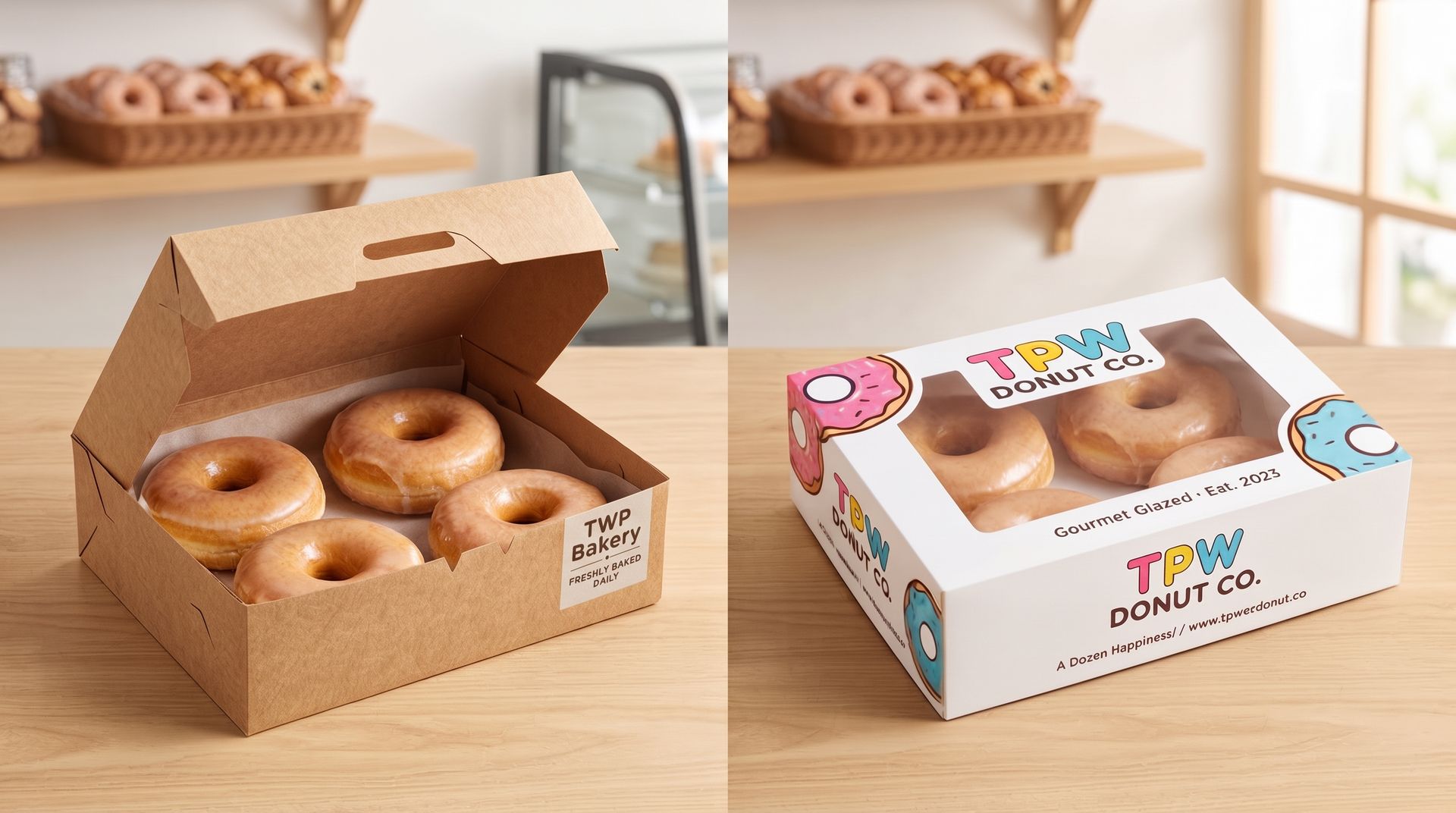
Before a customer ever takes that first delicious bite, their experience begins with the box in their hands. Whether you are running a neighborhood artisan bakery or scaling a multi-location donut franchise, your packaging plays a critical role in preserving pastry freshness, preventing grease stains, and communicating your brand identity.
For bakery owners and packaging managers, selecting the right container comes down to an essential debate: Kraft donut boxes versus white cardboard (SBS) donut boxes.
While both options offer reliable protection during transit, they serve vastly different aesthetic preferences, printing requirements, and brand values. On one hand, natural brown Kraft packaging speaks directly to eco-conscious consumers seeking an authentic, handcrafted feel. On the other, smooth bleached cardboard offers a crisp, white canvas perfect for vivid full-color printing, intricate logos, and high-visibility clear windows.
Understanding the structural differences, grease resistance capabilities, and cost profiles between Kraft and cardboard donut boxes will help you choose the ideal packaging solution to protect your treats, delight your customers, and strengthen your bakery’s brand image.
Grease Resistance & Moisture Control: Kraft vs. White Cardboard (SBS)
When hot, freshly glazed, or cake-style donuts are placed into a box, they release steam, heat, and oil. Managing this moisture and oil migration without compromising the box’s structural integrity or visual appearance is one of the biggest challenges in bakery packaging.
1. Kraft Stock: Fiber Strength vs. Oil Absorption
Structural Integrity under Heat: Unbleached Kraft paperboard is manufactured using the Kraft pulping process, which preserves long, undamaged cellulose fibers. These longer fibers create a dense, naturally strong matrix that resists tearing, sagging, or softening when exposed to steam from warm donuts.
The Oil Migration Challenge: Because Kraft paperboard is unbleached and porous, raw Kraft fibers naturally absorb oils from glazes, butter, and frying fats over time.
The Solution (Barrier Linings): Without a protective layer, grease can seep into the board, creating dark, unsightly oil spots on the bottom of the box. To prevent this while retaining an eco-friendly look, Kraft boxes are frequently lined with a food-safe biodegradable greaseproof barrier, water-based aqueous coating, or natural wax lining.
2. White Cardboard (SBS): Non-Porous Coating & Brand Protection
Clay-Coated Surface Barrier: Solid Bleached Sulfate (SBS) paperboard undergoes a refining process that coats the top printing side (and often the inner side) with a fine layer of white kaolin clay. This clay coating creates a non-porous, smooth surface that acts as a physical shield against oil migration.
Preserving Printed Branding: By stopping grease from soaking through the board, the clay coating protects the outer printed artwork, logos, and custom typography from becoming dark or discolored during longer transit and delivery routes.
The Moisture Trade-off: While clay-coated SBS excels at holding back oil, it can trap steam if hot donuts are boxed too quickly without proper ventilation tabs. This can lead to condensation inside the box and soften crisp glazes.
Brand Aesthetics & Visual Appeal: Kraft vs. White Cardboard (SBS)
A donut box does far more than transport pastries; it acts as a mobile billboard as customers carry it down the street, into the office, or to family gatherings. The visual and tactile qualities of your chosen food boxes set the tone for your brand identity before the box is ever opened.
1. Kraft Boxes: Organic Warmth & Earthy Authenticity
The Craft & Eco Perception: Natural brown Kraft stock instantly signals sustainability, wholesome ingredients, and artisanal craftsmanship. For vegan bakeries, farm-to-table cafes, and boutique donut shops, the raw, unbleached texture establishes an immediate emotional connection with eco-conscious consumers.
Minimalist & Nostalgic Design: Kraft paperboard pairs best with minimalist design philosophies. Single-color or two-color flexographic printing—such as rich charcoal, deep forest green, or warm terracotta—complements the organic brown backdrop, creating a vintage, hand-stamped aesthetic without needing heavy ink coverage.
Textured Tactile Appeal: The soft, natural matte texture of Kraft provides a warm, tactile feel that reinforces the idea of fresh, small-batch baking done with care.
2. White Cardboard Boxes: High-Contrast Vibrancy & Modern Retail Focus
A Pristine, Blank Canvas: Solid Bleached Sulfate (SBS) paperboard provides a bright, uniform white surface with zero background texture distortion. This allows CMYK four-color process printing to render with crisp accuracy, true color consistency, and striking visual pop.
Ideal for Complex Branding: White cardboard is the gold standard for commercial bakery chains, franchise operations, and modern confectioners that rely on full-coverage pastel patterns, vivid food photography, sharp vector typography, and intricate vector graphics.
Superior PET Window Integration: The clean white frame surrounding a clear die-cut PET window creates a high-contrast showcase for colorful glazes, sprinkles, and specialty toppings—stimulating impulse buys on retail counters and delivery display racks.
Eco-Footprint & Recyclability: Kraft vs. White Cardboard (SBS)
As consumer awareness around sustainable food packaging continues to grow across the USA, the environmental footprint of your bakery packaging is a key factor in building long-term brand loyalty. While both Kraft and white cardboard are renewable, wood-pulp-based materials, their manufacturing methods and end-of-life processing differ significantly.
1. Kraft Packaging: Minimal Processing & High Circularity
Chemical-Free Pulping Process: Natural Kraft paperboard is manufactured without chlorine or optical bleaching agents. By eliminating these harsh chemical treatments, the manufacturing process reduces chemical wastewater output and consumes less total energy.
Superior Recycling & Biodegradability: Because Kraft fibers remain in their natural, unbleached state, the material breaks down easily in industrial composting systems and municipal recycling facilities. Unprinted or water-ink-printed Kraft boxes without synthetic laminations will naturally decompose in home or commercial compost environments without leaching toxic residues.
Higher Recycled Content: Kraft stock readily accepts high percentages of post-consumer recycled (PCR) fiber, often ranging from 30% to 100% PCR content, without losing its structural strength.
2. White Cardboard (SBS): Bleaching Intensity & Recycling Considerations
Energy-Intensive Bleaching: Solid Bleached Sulfate (SBS) requires multi-stage chemical bleaching processes (such as Elemental Chlorine Free / ECF processes) to strip natural lignin and achieve its bright white hue. This refining process requires higher energy and water consumption during pulp production.
Coating Impact on Compostability: While clean, uncoated SBS paperboard is 100% recyclable, white donut boxes frequently require synthetic Polyethylene (PE) or heavy plastic-based barrier linings to match the grease resistance of natural Kraft. These plastic-film layers make municipal repulping more difficult and prevent the box from being composted.
Recyclability Conditions: SBS boxes can be recycled easily in standard paper recycling streams, provided they are free from heavy food residues, oil saturation, or non-biodegradable plastic window films.
Core Material & Structural Differences
Parameter | Kraft Donut Boxes | White Cardboard (SBS/Paperboard) Boxes |
Material Base | Unbleached wood pulp (Virgin or Recycled Kraft) | Bleached chemical pulp (Solid Bleached Sulfate / SBS) |
Natural Color | Earthy brown / tan | Bright white |
Grease & Moisture Resistance | High natural fiber strength; often paired with bio-linings | Requires internal clay or PE/greaseproof coatings |
Custom Printing | Best for minimal, dark, mono-color flexographic printing | Superior surface for CMYK, PMS, glossy, & full-color litho printing |
Eco-Perception | High eco-appeal; 100% biodegradable & compostable | Recyclable, but looks processed due to bleaching |
Cost Profile | Economical for high-volume, organic, or minimalist branding | Moderate to high depending on coating and full-color print coverage |
Key Takeaways
Match Board Stock to Brand Identity: Choose natural Kraft for an organic, eco-friendly, or artisan aesthetic; opt for white SBS cardboard for vivid multi-color graphics, complex branding, and high-contrast retail display.
Understand Grease Management Needs: Unbleached Kraft offers natural fiber strength but requires an eco-friendly greaseproof lining for high-oil pastries; clay-coated SBS naturally blocks oil bleed-through to keep printed artwork crisp.
Factor in Sustainability & Carbon Footprint: Kraft paperboard involves minimal chemical processing and no bleaching, offering maximum biodegradability and easy municipal composting compared to energy-intensive bleached white board.
Optimize for Window Displays: White SBS cardboard serves as the ideal high-contrast frame for die-cut clear PET windows, highlighting colorful glazes and sprinkles to drive impulse counter purchases.
Balance Unit Cost with Volume: Kraft packaging provides a cost-efficient solution for daily high-volume bakery sales, while custom SBS cardboard provides a premium commercial presentation for franchises and delivery platforms.
Ready to protect your freshly baked pastries and showcase your unique brand with custom-engineered bakery packaging? Partner with The Packaging World to design tailored Kraft and SBS cardboard donut boxes built for durability, grease resistance, and shelf impact. From eco-conscious greaseproof Kraft boxes to vibrant, windowed retail cartons, we offer precision manufacturing, low MOQs, and wholesale pricing.
Need custom packaging for your product?
Get pricing, samples, and expert advice — no commitment required.
Topics
Industries