
Calculate the Quantity of Donut Boxes- Wholesale Inventory Guide
Struggling to find the right order balance for your custom donut boxes? Ordering too few drives up unit costs, while over-ordering clutters your stockroom and ties up working capital. This guide walks you through calculating baseline consumption, evaluating volume price breaks, managing storage space, and planning for seasonal demand spikes so you can order with confidence.

Awais M · Custom Packaging Specialist
Awais M helps small and mid-sized brands get custom packaging right — the box style, the material, the print finish, and the order quantity that actually fits the budget.
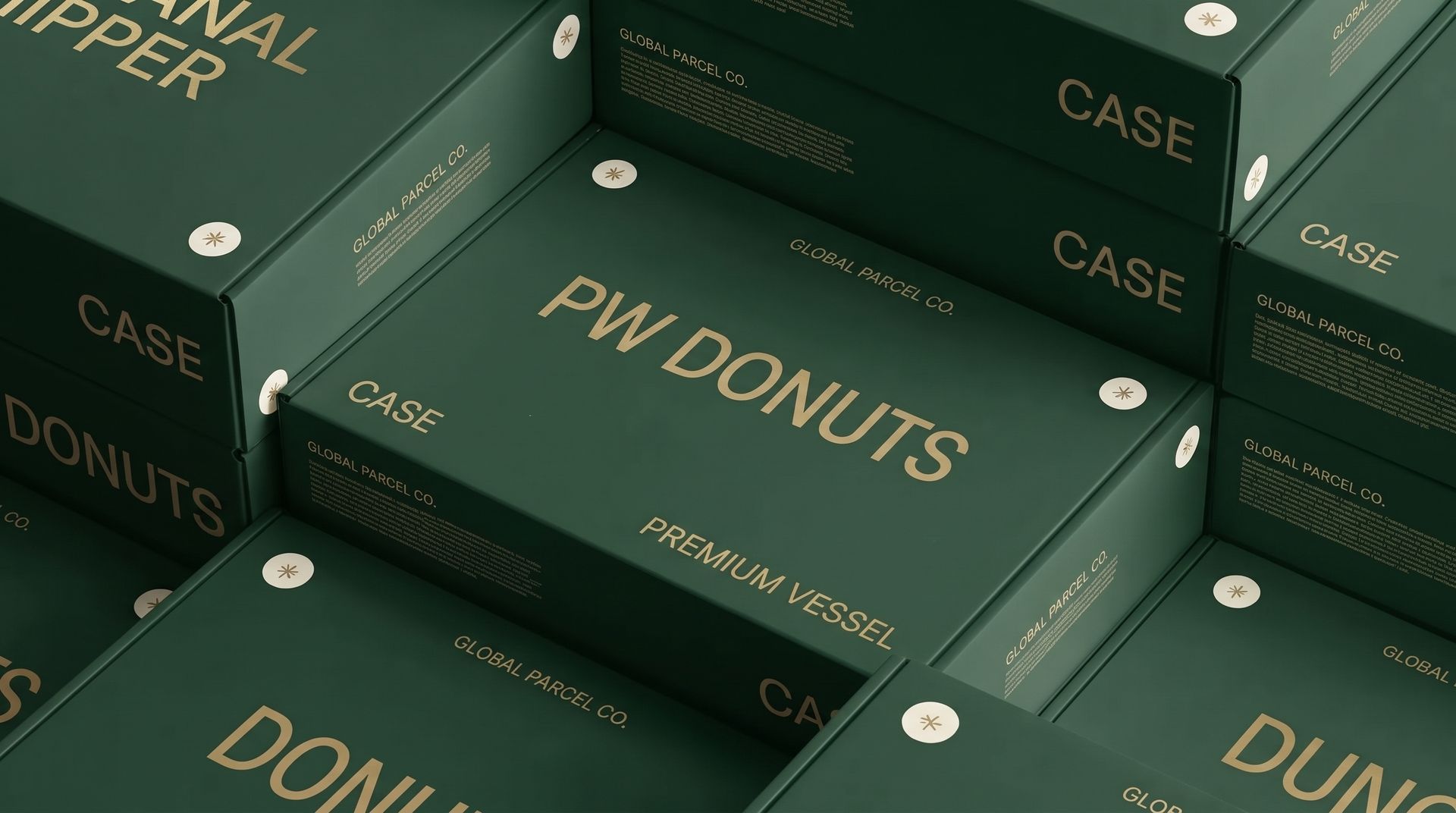
Every bakery owner knows the cold sweat that hits on a bustling Saturday morning when you reach for a half-dozen box and realize you are staring at the bottom of your very last stack. Yet, on the flip side, nothing kills operational flow quite like filling half your stockroom with towering pallets of packaging that eat up valuable cash flow and square footage for months on end.
Deciding on your custom donut boxes order quantity is rarely a matter of picking a nice, round number out of thin air. It is a strategic balancing act between unit economics, available physical storage space, and working capital. Order too few, and high unit costs will eat away at your profit margins while leaving you vulnerable to sudden stockouts; order too many, and you risk tying up vital cash in inventory that sits vulnerable to stockroom humidity and accidental damage.
In this guide, we will break down a practical framework to help you accurately calculate, scale, and lock in the ideal order volume for your bakery's custom boxes.
Calculating Baseline Consumption Metrics of Donut Boxes
Before you can determine your optimal reorder points or evaluate bulk price breaks, you need an accurate picture of your actual box consumption rate. Grounding your order quantities in real point-of-sale data—rather than estimates—prevents costly overstocking and unexpected shortages during high-volume shifts.
Daily & Weekly Sales Audits
Begin by auditing your point-of-sale (POS) data over a standard 30- to 90-day period for donut boxes. Instead of tracking total donuts sold, track how those donuts move out the door across your specific box sizes:
Single & Pair Boxes (1–2 pack): Typically tied to express morning coffee runs and grab-and-go counter traffic.
Half-Dozen Boxes (6-pack): Often the primary sales driver for small office treats, family visits, and mixed flavor samplers.
Full-Dozen Boxes (12-pack): High-volume movers for weekend catering, corporate events, and family gatherings.
Multiply your average weekly usage for each box size by your planned inventory cycle (for example, a 6-week or 12-week stock supply) to establish a firm baseline count.
Factoring in Waste & Operational Buffer
Your baseline consumption number represents a best-case scenario where every box is successfully filled and sold. Real-world bakery environments require a built-in safety margin. Always add a 10% to 15% operational buffer to your total box baseline to account for:
Assembly Accidents: Mis-folds, ripped tabs, or dropped cartons during fast-paced morning rushes.
In-Store Spoilage & Handling: Minor grease stains or transit scuffs during backroom stocking.
Unplanned Sales Spikes: Unexpected catering requests, viral social media traffic, or local event rushes that exceed standard projections.
Lead Time Calculations & Reorder Triggers
To maintain continuous operations without over-ordering, map your vendor’s total lead time. This includes structural proofing, printing, die-cutting, drying, and ground freight.
Calculate your reorder point using this simple formula:
Reorder Point = (Average weekly Consumption x Lead Time in Weeks) + Buffer Stock
For example, if you use 500 half-dozen boxes per week and your packaging vendor takes 3 weeks from approval to delivery, your base threshold is 1,500 boxes. Adding a 15% safety buffer (225 boxes) means your automated reorder trigger should fire the moment your inventory drops to 1,725 boxes.
Understanding Packaging Volume Price Breaks
Once you know your baseline consumption, the next step is evaluating how order volumes impact your bottom line. Custom box manufacturing carries heavy fixed setup costs, which means the quantity you order directly dictates the unit price you pay. Understanding this pricing curve allows you to strategically scale orders to maximize profitability without overextending your working capital.
The Unit Cost Curve
In custom packaging manufacturing, every job requires fixed initial setup steps—including structural CAD layout, custom die-cutting plate creation, printing plate mounting, and press calibration. Whether a press prints 500 boxes or 50,000 boxes, these setup expenses remain constant.
Low Volumes: On smaller orders, fixed setup costs are distributed across fewer units, resulting in a significantly higher cost per box.
High Volumes: As run lengths increase, fixed setup expenses get diluted across thousands of units, driving the individual unit cost down dramatically. Once the press reaches maximum running speed, the cost per box drops close to the raw material and ink cost.
Short Runs vs. Bulk Wholesale
Choosing between low Minimum Order Quantities (MOQs) and high-volume wholesale runs depends entirely on how you intend to use the packaging:
Short Runs (500 – 1,000 units): Ideal for short-run seasonal promotions, limited-edition flavor drops, or testing new bakery locations. While the cost per unit is higher, short runs preserve cash flow and prevent leftover inventory if a limited-time concept changes.
Bulk Wholesale (5,000 – 20,000+ units): The ideal approach for your core everyday packaging (such as standard 6-pack and 12-pack boxes). Bulk orders unlock steep volume discounts, ensuring your daily retail margins stay protected over months of operation.
Finding the "Sweet Spot"
The key to volume ordering is finding the financial "sweet spot"—the exact volume threshold where unit price savings begin to level off, balancing cost reductions against working capital limits. For example, jumping from 1,000 to 2,500 boxes might drop your unit cost by 35%, while moving from 2,500 to 5,000 drops it another 20%. However, pushing from 5,000 to 10,000 might only net a 4% unit savings while doubling your upfront cash layout and storage needs.
Aim for the volume tier that yields the largest percentage drop in unit cost while keeping inventory turnover within a manageable 60- to 90-day window.
Storage Capacity & Environmental Considerations
Securing a massive volume discount on packaging means little if your stockroom cannot physically hold the inventory or if poor storage conditions ruin the boxes before they ever reach the counter. Evaluating your physical footprint and environmental controls is a critical step in finalizing your order volume.
Square Footage Footprint
Before committing to a high-volume wholesale run, map out your available storage footprint in terms of flat-pack bundles and full pallet loads:
Flat-Pack Bundles: Custom paperboard donut boxes ship flat-packed in tight, strapped bundles (typically 50 to 100 units per bundle). A run of 2,500 flat-packed half-dozen boxes generally occupies about two to three standard shelving tiers.
Pallet Dimensions: Bulk orders of 10,000+ units arrive on standard wooden pallets (40” x 48”) stacked up to 5 feet high. Make sure your facility has designated floor space, high-clearance shelving, and wide enough doorways or receiving corridors to maneuver incoming shipments smoothly.
Climate Control & Shelf Life
Paperboard is a porous, organic material that reacts directly to its surrounding environment. Storing custom packaging for extended periods requires proper climate controls to prevent material breakdown:
Humidity & Moisture: High humidity softens paperboard fibers, weakening structural integrity and causing auto-bottom or lock-corner boxes to buckle under weight. Moisture can also cause plant-based PLA viewing windows to fog or detach from their adhesives.
Temperature Extremes: Excess heat degrades specialty glue lines and causes grease-resistant barrier coatings to become brittle or tacky. Store boxes in a cool, dry area away from direct sunlight, dough retarders, steam outlets, and ovens.
Contamination Prevention: Keep packaging elevated at least six inches off the floor on pallets or wire racks to protect against accidental floor spills, cleaning chemicals, and grease migration from neighboring kitchen prep zones.
Inventory Rotation (FIFO Strategy)
To keep your food-contact packaging pristine, enforce a strict First-In, First-Out (FIFO) inventory rotation system:
Sequential Stacking: Place newer shipments behind older stock on storage shelves so staff naturally pull older inventory first.
Date Tagging: Mark incoming master cases or pallet bundles with arrival dates using bold permanent marker or color-coded stickers.
Quality Assurance Checks: Regularly inspect older stock for dust buildup, structural warping, or loss of window clarity before moving it to front-of-house assembly tables.
Seasonal Demand Fluctuation & Promotional Planning
A static, one-size-fits-all ordering model quickly falls apart when major holidays, seasonal flavor drops, and community events roll around. To maximize holiday sales without ending up with leftover, out-of-season inventory, your box quantities must scale dynamically with seasonal demand.
Peak Holiday Spikes
Bakery sales jump significantly during major gifting holidays like Valentine’s Day, Halloween, Thanksgiving, and Christmas, as well as during local festival seasons.
Forecast Inventory Lifts: Review historical POS trends from previous holiday quarters and project an inventory lift—typically 20% to 50% above normal baseline usage—to cover gift-giving rushes.
Order Early: Supply chains tighten significantly ahead of Q4. Lock in your seasonal box orders 6 to 8 weeks in advance to avoid expedited shipping fees or production delays.
Splitting Order Volumes
Rather than printing custom-branded seasonal boxes for every holiday—which requires high upfront capital and carries heavy inventory risk—smart bakeries use a hybrid packaging approach:
Core Boxes: Order your main, year-round branded boxes in bulk wholesale quantities (5,000–10,000+ units) to lock in the lowest possible unit cost.
Promotional Sleeves & Labels: Pair your core boxes with short-run (500–1,000 units) custom-printed belly bands, decorative sleeves, or festive die-cut stickers for specific holidays. This gives your boxes a fresh seasonal look while keeping core packaging stock active year-round.
Limited-Time Offers (LTOs)
Special flavor drops, chef collaborations, or limited-run artisan series require tight inventory management to avoid stranded packaging stock:
Cap the Production Run: Match your custom LTO box order directly to the total projected ingredient supply or campaign duration. If you only plan to sell 1,000 specialty box units, order a short run capped at 1,100 boxes (including buffer).
Versatile Sizing: Design LTO boxes in standard dimensions so any leftover units can be repurposed for standard menu offerings if a promotion wraps up early.
Order Quantity Decision Matrix
Business Stage / Need | Recommended Order Volume | Key Advantage | Main Consideration |
New Bakery Launch / Pop-Up | Short Run (500 – 1,000 units) | Preserves startup capital | Higher cost per unit |
Established Single-Location | Mid-Tier (2,500 – 5,000 units) | Balances price breaks & storage | Requires steady 2–3 month turnover |
Multi-Unit / High Volume | Bulk Wholesale (10,000+ units) | Lowest possible unit cost | Demands dedicated warehouse space |
Seasonal / Holiday Drop | Target Short Run (500 – 1,500 units) | Unique seasonal branding | Strict deadline lead times |
Ready to optimize your packaging inventory and secure the ideal unit rates for your bakery? At The Packaging World, we make ordering custom donut boxes simple, cost-effective, and tailored to your exact operational scale. Whether you need short-run promotional batches or high-volume wholesale shipments, our team delivers food-grade materials, precision structural designs, and fast turnaround times to keep your counters fully stocked. Contact us at sales@thepackagingworld.com today to request a free custom quote.
Need custom packaging for your product?
Get pricing, samples, and expert advice — no commitment required.
Topics
Industries