
What is Atomizer? Types, Packaging, Uses
From luxury perfume mists to calibrated medical sprays, atomizers rely on precision fluid dynamics to convert bulk liquid into a controlled mist. This comprehensive technical guide breaks down atomizer anatomy, key structural types, bottle neck finishes, and essential custom packaging strategies to protect and showcase spray products effectively.

Awais M · Custom Packaging Specialist
Awais M helps small and mid-sized brands get custom packaging right — the box style, the material, the print finish, and the order quantity that actually fits the budget.
Whether it is the delicate, ambient cloud of a luxury fragrance or the targeted, calibrated delivery of a life-saving nasal spray, our daily routine relies heavily on uniform liquid dispersion. Yet, few consumers realize that this seamless experience relies entirely on one microscopic mechanical engine: the atomizer.
At its core, an atomizer is a precision mechanical device designed to convert bulk liquid into a fine mist, spray, or aerosol. Rather than relying on chemical propellants, mechanical packaging atomizers utilize pressure differentials generated during manual actuation to pull liquid from a reservoir and disperse it evenly into the air.
In this technical guide, we will explore the inner workings of packaging atomizers from the ground up. We will break down essential mechanism fundamentals, compare structural atomizer types across cosmetic and pharmaceutical applications, detail bottle compatibility and custom packaging integrations, analyze primary industry uses, and outline key engineering selection criteria for your next product launch.
Anatomy & How an Atomizer Works
An atomizer relies on a series of synchronized mechanical components to draw, compress, and disperse liquid efficiently:
Dip Tube: Extends from the pump engine down to the base of the bottle reservoir, drawing liquid upward through vacuum pressure created during pump actuation.
Piston & Cylinder Assembly: Forms the internal pressure chamber. Pressing the pump compresses the liquid trapped inside the cylinder, building the kinetic force required for dispersion.
Spring Mechanism: Provides dynamic recoil tension, returning the piston to its starting position after each stroke to automatically pull the next dose into the chamber.
Actuator & Nozzle Orifice: Serves as the precise exit point. It forces high-pressure liquid through a microscopic, engineered restriction to break surface tension and atomize the stream into uniform micro-droplets.
Gasket & Closure: Features an internal elastomer gasket and threaded (or crimped) collar that locks the pump housing to the bottle neck, ensuring a completely leak-proof seal during storage and transport.
Core Types of Packaging Atomizers
Packaging atomizers vary across distinct core types, each engineered for specific dosage requirements, liquid viscosities, container materials, and user applications:
1. Fine Mist Sprayers (Cosmetic & Personal Care)
Designed to deliver low, metered doses (0.05- 0.2 mL per stroke), these pumps break low-viscosity liquids into wide, gentle plume patterns.
Applications: Facial toners, setting mists, body sprays, and leave-in hair treatments.
Key Mechanism: Uses micro-diameter nozzle orifices and tight internal piston seals to ensure even spatial coverage without soaking the target surface.
2. Perfume & Fragrance Atomizers
High-end micro-sprayers designed specifically to pair with decorative glass fragrance bottles.
Attachments: Available in screw-on threads (refillable bottles), crimp-on necks (permanent factory seals to prevent tampering/evaporation), or push-fit snap collars.
Aesthetics & Sealing: Features polished metallic collars (aluminum/brass) and protective overcaps to preserve volatile fragrance notes.
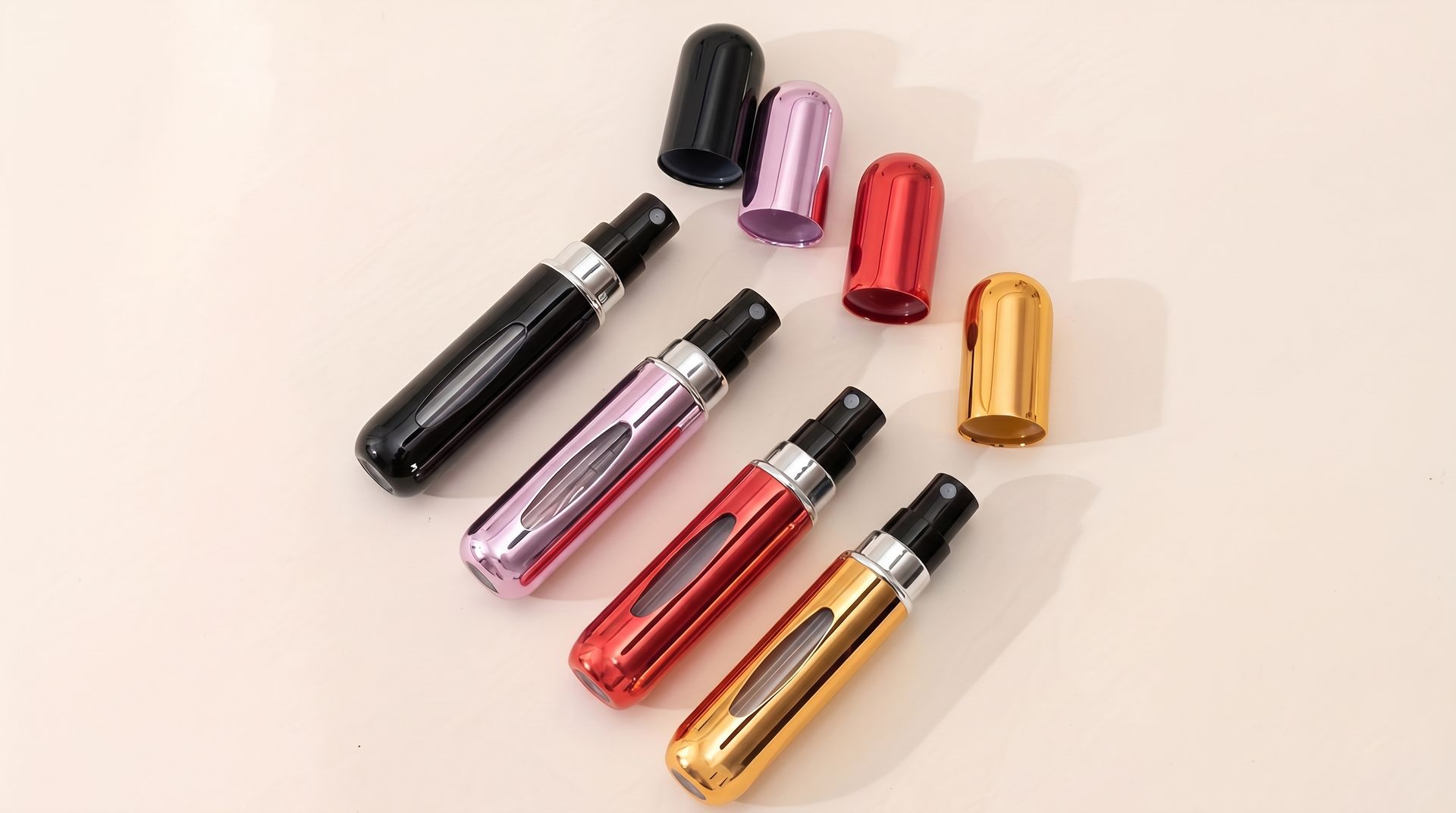
3. Travel & Pocket Portable Atomizers
Compact, leak-proof mini-vials engineered for on-the-go convenience and TSA compliance (5-10 mL capacity).
Refill Mechanics: Built with bottom-fill valves that connect directly to standard perfume nozzle stems, or top-fill mini pipettes.
Durability: Encased in drop-resistant anodized aluminum shells to protect inner glass/plastic reservoirs from impact damage.
4. Nasal & Medical Atomizers
Strictly calibrated volumetric sprayers designed to deliver exact dosage volumes to sensitive mucous membranes.
Design Features: Equipped with extended, smooth nozzle tips for comfortable targeted cavity insertion and side-wing finger grips for single-handed actuation.
Sanitation & Precision: Often built using USP Class VI pharmaceutical polymers and valved pumps to prevent back-suction and fluid contamination.
5. Trigger Sprayers & Heavy-Duty Pumps
High-output atomizers (0.7- 1.5+ mL per stroke) built with ergonomic hand levers to process larger volumes and higher-viscosity liquids.
Nozzle Controls: Adjustable front nozzles that twist to toggle between a focused jet stream, a wide spray plume, or a total off-lock position.
Applications: Household chemical cleaners, garden pesticides, auto detailing products, and janitorial disinfectants.
Packaging Materials, Bottle Compatibility, & Custom Boxes
Selecting the right container and outer packaging is essential for protecting the atomizer mechanism, ensuring chemical compatibility, and preventing leaks in transit.
Glass Bottles: Highly non-reactive and crystal clear, making them the industry standard for luxury perfumes, essential oils, and alcohol-rich formulations. They pair seamlessly with permanent crimp pumps or threaded atomizers.
Plastic Polymers (PET, HDPE, PP): Shatterproof and lightweight materials suited for travel products, mass-market body mists, and clinical formulations. Polypropylene (PP) is commonly used for internal pump components due to its high chemical resistance.
Aluminum Shells & Containers: Offer 100% light blockage to shield light-sensitive formulations from UV degradation while providing durable, impact-resistant protection for travel sprayers and pressurized canisters.
Neck Finish Standardization: Atomizer pumps and bottle necks must share identical thread standards (e.g., 18/410, 20/410, 24/410, where the first number is the neck diameter in mm and the second is the thread style) to guarantee a precise, leak-tight seal.
Custom Packaging Boxes for Atomizers:
Structural Styles: Utilizes tuck-end folding cartons for retail shelves, or two-piece rigid boxes, sliding drawer boxes, and magnetic closures for high-end fragrance presentation.
Internal Protection & Fit: Features custom die-cut cardboard or high-density EVA foam inserts that grip the bottle's base and neck. Inserts maintain an engineered clearance gap above the actuator button, preventing accidental spraying caused by top pressure during shipping.
Unboxing & Brand Elevation: Incorporates premium finishing techniques—such as hot foil stamping, spot UV, embossing, and multi-vial tray arrangements- to turn single atomizers or discovery sample sets into memorable brand experiences.
How Does an Atomizer Work?
The transformation from liquid to mist is a masterclass in fluid dynamics, relying primarily on Bernoulli’s principle and pressure displacement. When you press down on the actuator, liquid inside the pump chamber is forced under high pressure through a microscopic exit nozzle orifice. As the velocity of the liquid accelerates through this narrow restriction, the rapid drop in pressure and intense shear forces break the liquid's surface tension, instantly atomizing the liquid stream into millions of micron-sized droplets.
Key Industry Applications & Uses
Atomizers serve across diverse commercial sectors, converting liquid formulations into functional sprays optimized for performance, dosage accuracy, and user convenience:
Fragrance & Perfumery: Delivers controlled dispersion of fine scents, breaking down concentrated eau de parfum or eau de toilette liquids to prevent oversaturation and allow top, heart, and base notes to unfold evenly.
Cosmetics & Skincare: Provides micro-droplet application for liquid formulas such as facial toners, makeup setting sprays, hydration mists, and self-tanners without disrupting underlying cosmetics or irritating the skin.
Pharmaceuticals & Healthcare: Administers precise, metered volumetric dosages for clinical applications, including nasal decongestants, soothing throat sprays, oral antiseptics, and targeted respiratory asthma treatments.
Household & Janitorial: Powers high-output trigger atomizers that deliver broad surface coverage for glass cleaners, disinfectant sanitizers, fabric refreshers, and room deodorizer mists.
Culinary & Food Packaging: Utilizes food-grade, non-reactive dosing pumps to spray fine coats of gourmet olive oils, vinegar glazes, cooking pan sprays, and liquid flavor extracts for precise cooking applications.
Engineering Considerations for Purchasing & Product Design
When specifying atomizers for commercial packaging, procurement teams and structural designers must evaluate four critical engineering factors to ensure product functionality, shipping safety, and environmental compliance:
Viscosity Matching: Selecting internal orifice geometry, dip tube inner diameter, and spring tension calibrated to the liquid’s thickness, ensuring water-thin mists spray smoothly without dripping, while thicker oils or lotions do not clog the pump.
Dosage & Spray Angle Control: Engineering actuator specifications to control both stroke volume (typically 0.05-0.2 mL per pump) and spray pattern cone width, matching the dispersion area to the product's intended application.
Leak Prevention & Shipping Integrity: Integrating safety mechanisms, such as twist-lock actuators, overcaps, shipping travel clips, and leak-proof gaskets, to prevent accidental discharge caused by pressure changes or impacts during e-commerce transit.
Sustainability & Recyclability: Transitioning to eco-conscious pump designs, including all-plastic monomaterial (Polypropylene) construction with metal-free plastic springs, allowing consumers to recycle the entire bottle and atomizer unit without disassembly, or utilizing refillable pod systems.
Key Takeaways
The Core Mechanism: An atomizer is a precision engine that uses mechanical pressure and fluid dynamics (Bernoulli’s principle) to transform bulk liquid into a fine, controlled micro-droplet mist.
Component Synchronization: Flawless dispersion relies on five core internal parts: the dip tube, piston/cylinder assembly, dynamic recoil spring, engineered actuator orifice, and leak-proof neck gasket.
Specialized Categorization: Different applications require dedicated pump designs, ranging from ultra-low dosage fine mist sprayers and crimped luxury perfume pumps to calibrated medical nasal sprayers and high-output trigger actuators.
Vessel & Thread Alignment: Matching liquid chemical properties to the right container (glass, plastic, or aluminum) and ensuring exact neck finish standardization (e.g., 18/410, 20/410) is critical to prevent leakage and product degradation.
Custom Packaging Protection: Custom boxes and engineered inserts (like die-cut board or EVA foam) must maintain a clearance gap above the actuator button to prevent accidental discharge during transit and deliver a premium unboxing experience.
Engineering & Sustainability: Successful product development hinges on matching pump specs to liquid viscosity, incorporating travel locks for shipping safety, and adopting eco-friendly monomaterial (PP) or refillable designs.
Ready to enhance your fragrance line with packaging that turns casual shoppers into brand loyalists? Whether you need precision-engineered bottle dielines, leak-proof component sourcing, or high-end custom presentation boxes, The Packaging World has you covered.
Need custom packaging for your product?
Get pricing, samples, and expert advice — no commitment required.
Topics
Industries