
Types of Tofu Packaging Based on Shelf Life
Preserving plant-based proteins requires advanced packaging capable of controlling oxygen transmission, moisture activity, and microbial growth. This technical guide examines how specialized tofu packaging, ranging from ambient aseptic cartons to thermoformed liquid trays, aligns with strict storage tiers to maximize shelf life, prevent transport leaks, and ensure product freshness across the supply chain.

Awais M · Custom Packaging Specialist
Awais M helps small and mid-sized brands get custom packaging right — the box style, the material, the print finish, and the order quantity that actually fits the budget.
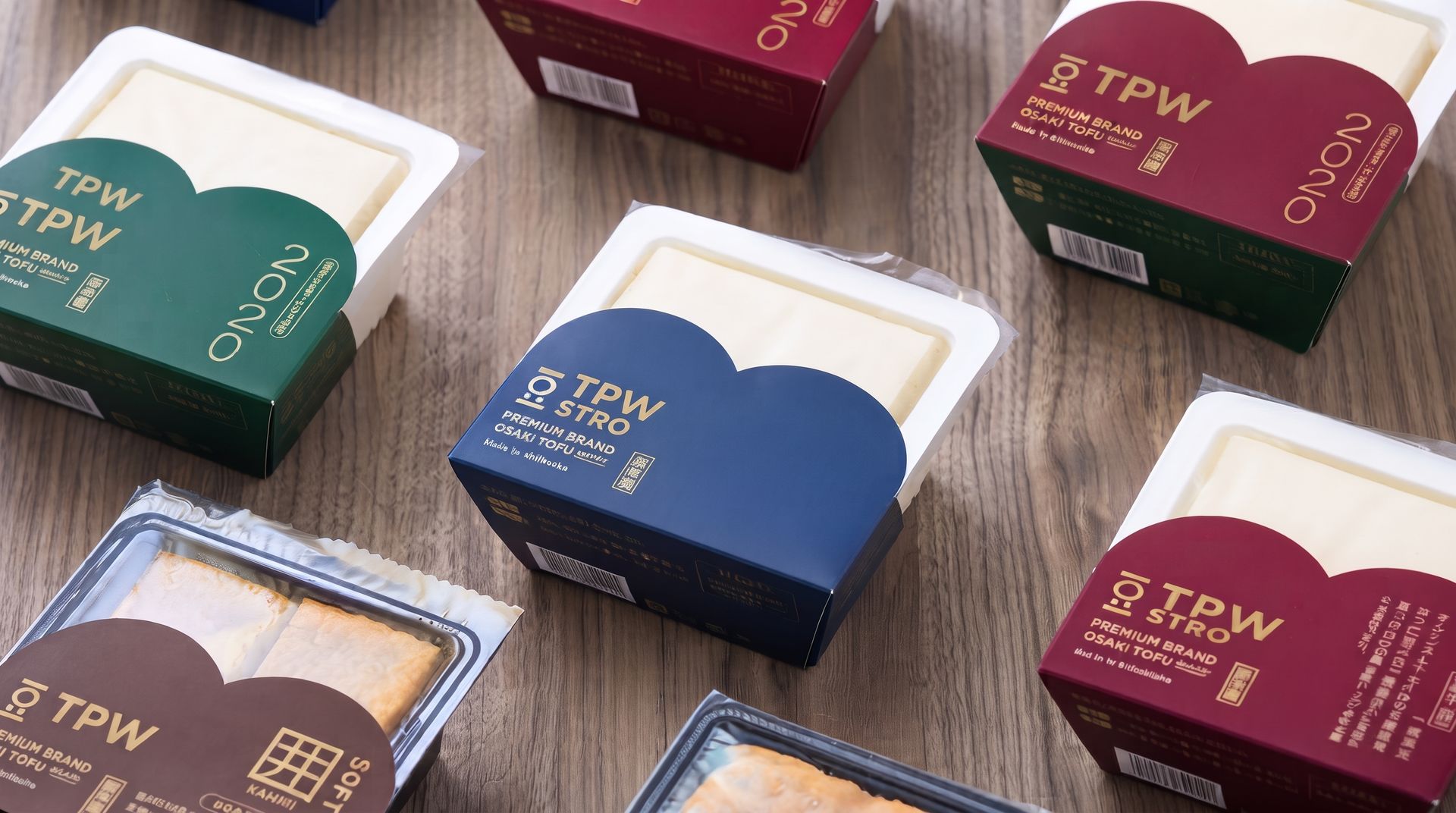
Tofu is one of the most widely consumed plant-based proteins in the world, yet its unique chemical composition makes it exceptionally vulnerable to rapid degradation. High in protein and moisture, raw soybean curd provides an ideal environment for bacterial growth and oxidative spoilage if left unprotected. Because liquid water activity drives spoilage in fresh plant proteins, maintaining strict environmental control during transport, retail display, and home storage is essential to preserving texture, flavor, and consumer safety.
This vulnerability makes specialized tofu packaging a necessity rather than an afterthought. Tailored packaging environments act as the primary barrier against contamination, actively regulating moisture retention, oxygen ingress, and microbial activity from the moment the curd is pressed to the final consumer purchase. Whether utilizing nitrogen gas flushes, sterile liquid submersion, or multi-layer barrier films, the choice of packaging directly dictates product safety and commercial viability.
This guide provides a technical breakdown of how specific tofu packaging formats align with storage tiers, from ambient aseptic cartons to modified atmosphere retail containers, to maximize shelf life, prevent spoilage, and maintain product integrity across every stage of the supply chain.
Shelf Life Breakdown by Tofu Packaging Formats & Storage Conditions
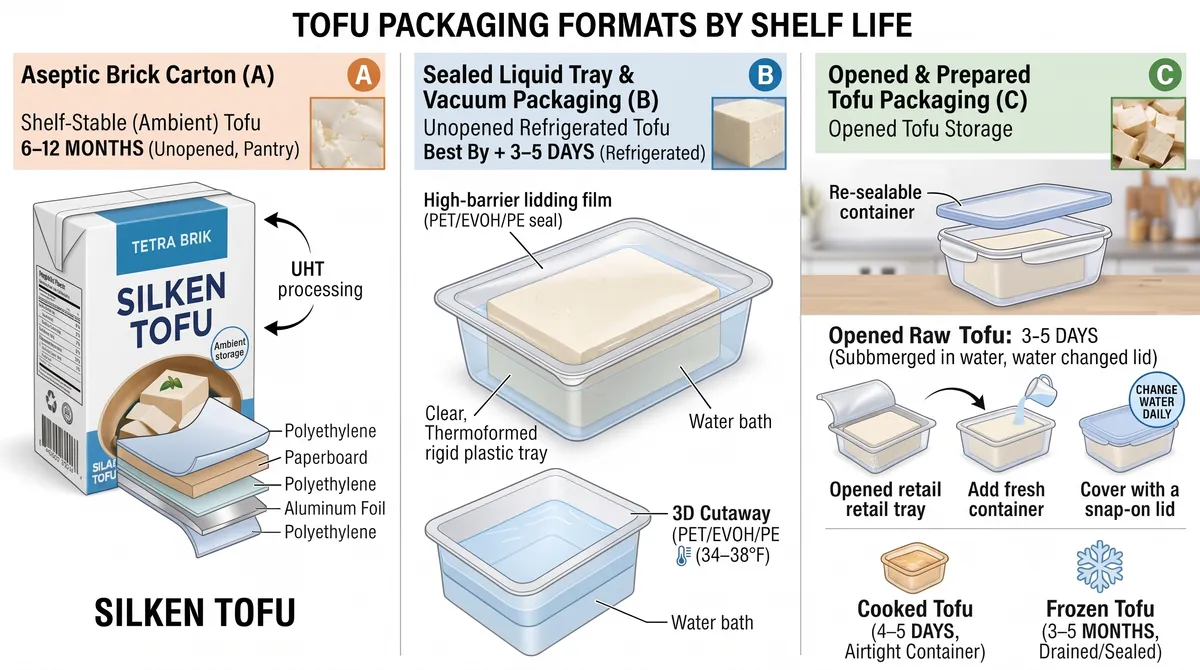
A. Ambient & Extended Shelf Life: Aseptic Liquid Packaging
Shelf-Stable Pantry Tofu: Aseptic packaging allows unopened tofu to remain safe and shelf-stable at room temperature for 6 to 12 months without refrigeration.
Packaging Mechanics: The product is sterile-filled into a multi-layer composite box consisting of paperboard for structural rigidity, polyethylene for liquid sealing, and a micro-thin aluminum foil barrier that completely blocks light, oxygen, and external odors. Combined with ultra-high temperature (UHT) flash processing, this hermetic design prevents microbial activity without requiring chemical preservatives
B. Commercial Fresh Retail: Sealed Liquid Tray & Vacuum Packaging
Unopened Refrigerated Tofu: Stays fresh throughout its commercial shelf life up to the printed "best by" date, remaining safe for 3 to 5 days past the printed date when kept continuously chilled in the refrigerator.
Packaging Mechanics: The tofu block is submerged in purified water inside a thermoformed rigid plastic tray (typically Polypropylene/PP or PET) and sealed with a high-barrier top lidding film. The water bath protects the soft curd from physical impacts during transit, prevents surface drying, and maintains structural hydration. High-barrier lidding films (often utilizing EVOH layers) restrict oxygen transmission, helping prevent bacterial spoilage while preserving freshness under continuous refrigeration.
C. Post-Purchase & Storage Adaptability: Opened & Prepared Tofu Packaging
Opened Raw Tofu: Once the factory seal is broken, raw tofu remains fresh for 3 to 5 days in the refrigerator if fully submerged in fresh, clean water. Food packaging designed for retail consumer convenience increasingly incorporates snap-on lid re-seals or rigid, reusable tubs that facilitate draining and daily water replacement, a critical step to prevent surface bacterial buildup and off-flavors.
Cooked Tofu Storage: Prepared or cooked tofu retains its quality and safety for 4 to 5 days when stored in a cold environment. To maintain moisture while preventing oxidation and cross-flavor contamination, the packaging or storage vessel must feature an airtight seal and low oxygen permeability.
Freezer-Grade Packaging: For extended storage, tofu can be frozen for 3 to 5 months in sub-zero conditions (whether pre-drained or unopened in its original package). Commercial and home freezer packaging relies on flexible, low-temperature puncture-resistant films (such as specialized nylon-polyethylene laminates) engineered to accommodate internal ice crystal expansion without tearing or causing freezer burn.
Browse other box formats: sushi boxes, noodle boxes, or catering boxes.
Comparative Matrix: Packaging Formats vs. Shelf Life & Preservation
Packaging Format | Storage Environment | Expected Shelf Life | Primary Preservation Mechanism |
Aseptic Brick Carton | Ambient Pantry | 6 to 12 Months | Hermetic aluminum/film seal + sterile filling |
Water-Filled Rigid Tray | Refrigerated (Unopened) | Best By + 3 to 5 Days | Hydrated barrier film + cold chain stability |
Resealable Home Container | Refrigerated (Opened) | 3 to 5 Days (Water Changed Daily) | Submersion in fresh water + physical cover |
Airtight Meal Prep Tub | Refrigerated (Cooked) | 4 to 5 Days | Oxygen barrier preventing ambient oxidation |
Cryogenic / Freeze Film | Frozen (Drained/Sealed) | 3 to 5 Months | Sub-zero insulation preventing freezing |
Material & Structural Considerations for Tofu Manufacturers
Selecting the right packaging specifications requires balancing product preservation, supply chain durability, and consumer convenience. Tofu manufacturers must evaluate three foundational engineering parameters:
Barrier Properties: Because tofu is exceptionally prone to lipid oxidation and bacterial growth, packaging films must integrate high-barrier materials. Co-extruded polymers incorporating EVOH (Ethylene Vinyl Alcohol) or thin aluminum foil layers create an impermeable barrier against oxygen ingress and light transmission. Blocking oxygen prevents aerobic bacterial proliferation and off-flavor development, while light-blocking layers prevent photo-oxidation and color degradation during retail display.
Leak & Puncture Resistance: Tofu packages contain immersion liquids (purified water or brine) that place continuous hydrostatic pressure on sealed seams during handling and shipping. Utilizing high-strength polymer blends (such as Linear Low-Density Polyethylene, or LLDPE) ensures high impact resistance and burst strength. Thermoformed trays and lidding films must feature wide, hermetic heat seals that prevent liquid leaks and withstand stress during multi-tier crate stacking and transit vibration.
Consumer-Centric Convenience: Modern packaging must transition smoothly from commercial storage to everyday consumer use. Incorporating easy-peel lidding films allows consumers to open liquid-filled trays smoothly without liquid splashing. Furthermore, multi-cavity trays with portion-control dividers let users access single blocks while keeping remaining portions sealed, while recloseable snap-on lids provide a dedicated vessel for submerging unused tofu in fresh water to maximize post-opening freshness.
Key Takeaways
Aseptic Technology Maximizes Pantry Life: Multi-layer brick packaging (combining paperboard, polyethylene, and aluminum) paired with UHT processing delivers a 6 to 12-month ambient shelf life without requiring refrigeration or chemical preservatives.
Refrigerated Trays Require Hydration & High Barriers: Unopened water-filled trays made of rigid PP/PET and sealed with EVOH barrier films keep fresh tofu stable through its "best by" date and up to 3 to 5 days past expiration under continuous cold storage.
Submersion Drives Post-Opening Freshness: Once opened, raw tofu maintains quality for 3 to 5 days in the fridge only if kept completely submerged in clean water that is changed daily.
Freezer Films Prevent Crystal Damage: Storing tofu for 3 to 5 months in sub-zero environments requires flexible, puncture-resistant laminates that accommodate ice expansion without tearing.
Seal Integrity Prevents Transit Failures: Heavy-duty LLDPE layers and wide hermetic heat seals are essential to withstand the hydrostatic pressure of immersion liquids during transit.
Partner with The Packaging World to engineer custom, high-barrier packaging tailored to your exact processing and storage requirements. From shelf-stable aseptic cartons to leak-proof, thermoformed tray setups with easy-peel barrier films, we offer complete custom packaging solutions, low MOQs, and reliable production turnarounds.
Need custom packaging for your product?
Get pricing, samples, and expert advice — no commitment required.
Topics
Industries